
Egg-free, dairy-free cookies. A berry juice. “Fruit” gummies. They all look like safe choices, yet any of them can contain animal-derived additives hidden behind an E number or a technical name.
If you follow a vegan diet, you know that reading the label is part of grocery shopping. The tricky part is knowing what to look for. Some food additives always come from animals, others can be plant-based or animal-based depending on the manufacturer, and a few sound suspicious but are perfectly vegan.
In this guide, you’ll learn which E numbers to check, which non-vegan ingredients hide in the ingredient list and how to spot them in seconds. It’s practical and free of scaremongering: most additives are safe, and knowing where they come from simply helps you choose in line with your values.
What Does Vegan Mean for Food?
A vegan food contains no ingredients or additives of animal origin, and no animal products are used to make it. That rules out meat and fish, but also milk, eggs, honey and anything derived from them.
Being vegan goes beyond diet: it’s a lifestyle that aims to avoid using animals as far as possible. On your plate, that means checking not only the obvious ingredients but also those that arrive as an additive, a flavoring or a processing aid.
One important detail: there is still no harmonized legal definition of “vegan” for food labeling in the EU. That’s why it pays to read the ingredient list yourself instead of relying only on the front of the pack.
Why a Product That Looks Vegan May Not Be
A product can look vegan and still not be, for three reasons: technical names that hide animal ingredients, additives of variable origin and recipes that change without notice.
Technical Names That Hide Animal Ingredients
Caseinate, lactitol, albumin or carmine don’t sound like milk, egg or insects, but that’s exactly what they are. Food labeling rules require manufacturers to list ingredients, not to explain where they come from. If you don’t know the term, it’s easy to miss.
Additives That Can Be Plant-Based or Animal-Based
Some additives are made from either plant or animal fats, and the label shows the same E number in both cases. The best-known example is E471, an emulsifier found in bread, pastries and ice cream. Without more information from the manufacturer, you can’t tell its origin just by reading the pack.
Recipes Change by Country, Batch or Reformulation
The same product can have a different recipe in another country, or change from one year to the next. If it was vegan the last time you checked, that doesn’t guarantee it still is. It’s worth re-reading the label now and then, even on your usual products.
Animal-Derived Additives: The E Numbers Every Vegan Should Know
E numbers are the codes used in the EU and the UK to identify approved food additives. Knowing the key ones lets you check a label in seconds. We’ve split them into three groups: those that are always animal-derived, the ambiguous ones, and those that sound suspicious but are usually vegan.
Additives That Are Always Animal-Derived
What Is E120 (Carmine or Cochineal) and Why Isn’t It Vegan?
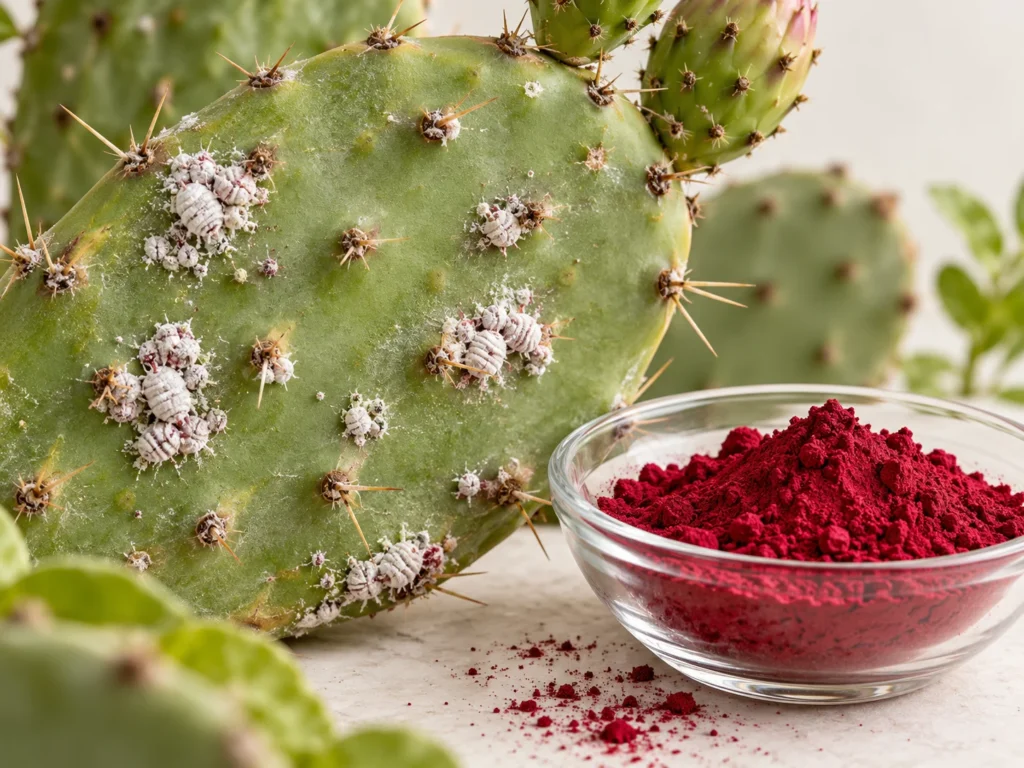
E120 is a red food coloring made from cochineal, a small insect that lives on cacti. To extract the pigment, carminic acid, the insects are dried and crushed. That’s why E120 is not vegan.
On the label it may appear as E120, carmine, carminic acid, cochineal or natural red 4. It gives a red, pink or purple color to yogurts, candy, drinks, ice cream, processed meats and some baked goods.
E901 (Beeswax) and E904 (Shellac)
Beeswax (E901) and shellac (E904) are used as glazing agents. They add shine to candy, chocolate-coated sweets and the skin of some fruit. Shellac is a resin secreted by an insect, so neither of them is vegan.
E913 (Lanolin), E966 (Lactitol) and E1105 (Lysozyme)
- E913 (lanolin): a grease obtained from sheep’s wool. It’s also the most common source of vitamin D3.
- E966 (lactitol): a sweetener made from milk lactose. It often appears in “sugar-free” products.
- E1105 (lysozyme): an enzyme extracted from egg white. It’s used as a preservative, mainly in cheese.
Ambiguous Additives: Emulsifiers and Others That Can Be Plant or Animal
This is the group that raises the most questions. The E number is the same whether the additive is plant-based or animal-based, so the label alone can’t tell you.
Is E471 Vegan? What This Emulsifier Is and Where It Comes From
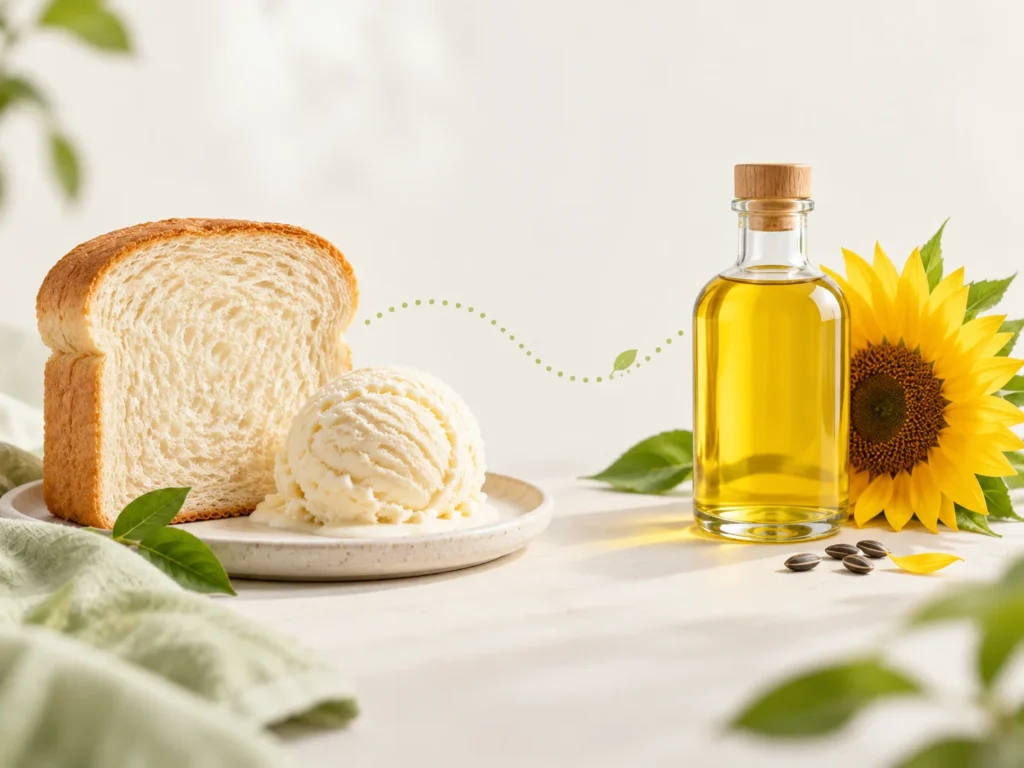
E471 stands for mono- and diglycerides of fatty acids. It’s one of the most widely used emulsifiers: it helps water and fat blend and improves the texture of bread, pastries, margarine, ice cream and plant-based creams.
It’s made from fats that can be plant-based (palm, soy, sunflower) or animal-based (tallow or lard). In many products it comes from vegetable oils, but not always.
So, is E471 a vegan emulsifier? It depends on the manufacturer. If the product carries a vegan label, you can trust it. If not, the only way to know is to ask the brand. The same applies to the related emulsifiers E472a to E472f.
E422 (Glycerol) and E570 (Stearic Acid)
Glycerol (E422) and stearic acid (E570) can also come from plant or animal fats. They’re used as humectants, anti-caking agents or glazing agents.
E322 (Lecithin): Soy, Sunflower… or Egg
Lecithin usually comes from soy or sunflower, but it can also be extracted from egg yolk. Here’s a useful tip: the rules require allergens to be highlighted, even when they’re part of an additive. If the lecithin comes from egg, the label must say so, for example “lecithin (egg)”.
E627, E631 and E635: Is Disodium Inosinate Vegan or Vegetarian?
Disodium guanylate (E627), disodium inosinate (E631) and their blend (E635) boost the savory flavor of chips, stocks, soups and salty snacks. They can be made by fermentation or from meat or fish. If you see these numbers on a product without a vegan label, it’s worth checking.
E920 (L-Cysteine) and Vitamin D3
- E920 (L-cysteine): an amino acid used to treat flour in industrial baking. It can come from feathers or animal hair, or from fermentation.
- Vitamin D3: many fortified foods include it, and it’s usually sourced from lanolin. Vegan versions made from lichen exist, and vitamin D2 is plant-based.
They Sound Suspicious, but They’re Usually Vegan
Some names are scarier than they should be. Lactic acid (E270) and the lactates (E325, E326 and E327) don’t come from milk: they’re almost always made by fermenting plant sugars. The same goes for cocoa butter, a plant fat, and coconut milk.
Summary Table: Food Additive List and Origin
| Additive | Name | Possible origin | Vegan? |
|---|---|---|---|
| E120 | Carmine, cochineal | Insect | No |
| E901 | Beeswax | Bee | No |
| E904 | Shellac | Insect | No |
| E913 | Lanolin | Sheep’s wool | No |
| E966 | Lactitol | Milk | No |
| E1105 | Lysozyme | Egg | No |
| E471 / E472 | Mono- and diglycerides and esters | Plant or animal | It depends |
| E422 | Glycerol | Plant or animal | It depends |
| E570 | Stearic acid | Plant or animal | It depends |
| E322 | Lecithin | Soy, sunflower or egg | It depends (check allergens) |
| E627 / E631 / E635 | Flavor enhancers | Fermentation, meat or fish | It depends |
| E920 | L-cysteine | Feathers, hair or fermentation | It depends |
| E270, E325–E327 | Lactic acid and lactates | Plant fermentation | Generally yes |
Is Gelatin Vegan? Why Not, and the Best Plant-Based Alternatives
Gelatin isn’t vegan because it’s made from collagen taken from the skin, bones and connective tissue of pigs, cattle or fish. It also has no E number: in the EU it’s classed as a food ingredient, not an additive. That’s why it simply appears as “gelatin” on the label, and it’s easy to overlook.
You’ll find it in gummies, dairy desserts, mousses, glazes, some yogurts and supplement capsules. It’s also used to clarify certain wines and juices, a case we’ll cover below.
The good news: vegan gelatin alternatives exist and are easy to recognize on the label. These plant- and seaweed-based gelling agents do the same job:
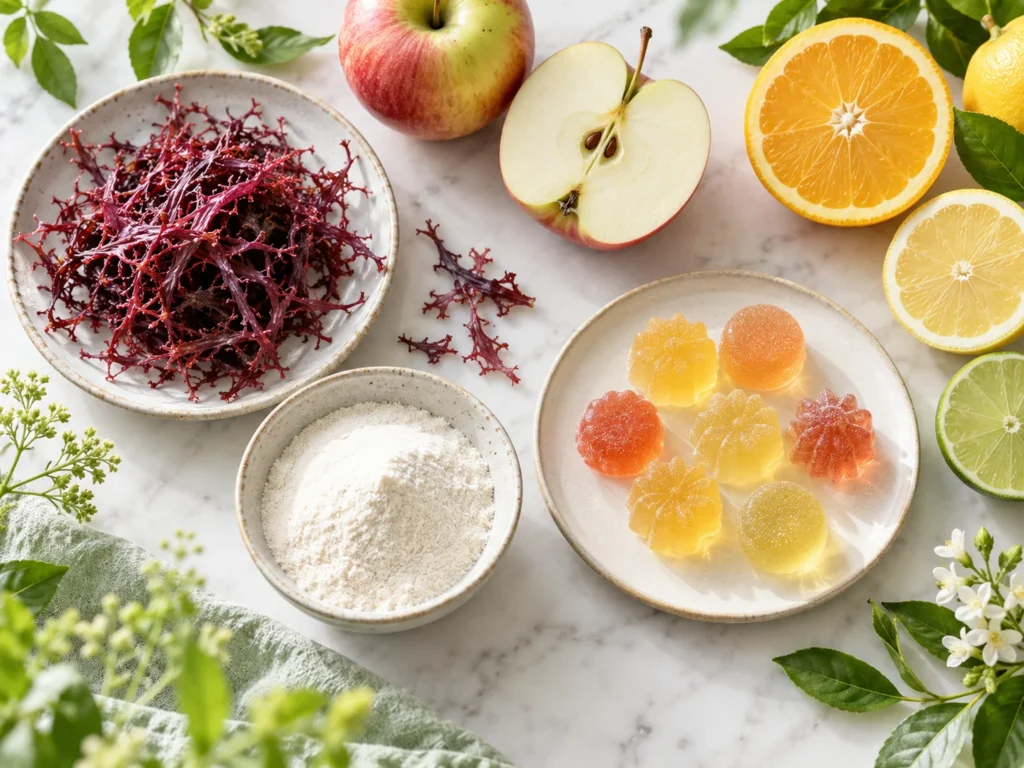
- Agar-agar (E406): extracted from red seaweed. It sets very firmly and holds up well to heat.
- Carrageenan (E407): also from red seaweed. Used in desserts, plant-based drinks and ice cream.
- Pectin (E440): obtained from fruit such as apples and citrus. It’s the base of many jams and vegan gummies.
Non-Vegan Ingredients That Reveal Animal Origin on the Label
Beyond E numbers, many animal ingredients show up in the ingredient list under less obvious names. These are the most common ones, plus the on-pack claims worth reading carefully.
Hidden Animal Ingredients in the List
| Ingredient | Origin | Where it often appears |
|---|---|---|
| Whey or whey powder | Milk | Bread, cookies, snacks, chocolate |
| Casein or caseinate | Milk | Processed meats, spreads, pizza “cheese” |
| Lactose | Milk | Chips, seasonings, processed meats |
| Albumin or ovalbumin | Egg | Fresh pasta, pastries, wine fining |
| Honey | Bee | Cereals, cookies, sauces, snack bars |
| Lard or tallow | Pig or cattle | Pastries, doughs, frying fats |
| Milk fat or butter | Milk | Pastries, sauces, chocolate |
| Fish oil (omega-3) | Fish | Fortified milks and juices |
A common source of confusion: “lactose-free” doesn’t mean dairy-free. A lactose-free product can still contain cow’s milk with the lactose removed.
“Vegetarian” Doesn’t Mean “Vegan”
A vegetarian product contains no meat or fish, but it can contain milk, eggs or honey. If the pack only says “vegetarian”, check the ingredient list before treating it as vegan.
“May Contain Traces of…”: What It Really Means
This is a voluntary warning for people with allergies. It means the product is made in a facility that also handles that allergen, such as milk or egg, so there’s a risk of cross-contact. It doesn’t mean milk or egg are part of the recipe.
Many vegans accept these products, since the animal ingredient wasn’t added on purpose. It’s a personal choice: what matters is understanding what the label actually says.
Vegan Labels and Certifications: What They Guarantee
Vegan labels from independent certification bodies are the fastest way to check a product. They usually verify that no animal ingredients, additives or processing aids were used.
They do have a limit: not every vegan product gets certified, because certification costs the manufacturer money. Plenty of vegan foods carry no label at all, and that’s where knowing how to read food labels makes the difference.
Hidden Cases Every Vegan Should Know About
Some animal products are used during processing and never show up on the label. There’s no need to obsess over them, but knowing about them helps you make informed choices.
Is Sugar Vegan? Bone Char Refining
In some countries, including the US, part of the cane sugar supply is whitened with bone char, a charcoal made from animal bones. The bone char doesn’t remain in the sugar, so it never appears on the label.
In Europe, most sugar comes from sugar beet, which isn’t refined this way. If this matters to you, choose beet sugar, unrefined cane sugar or products with a vegan label.
Wine, Beer and Juice Fined with Animal Products
Some wines, beers and juices are clarified (“fined”) with animal-derived agents: gelatin, isinglass (from fish bladders), casein or egg white. They pull suspended particles out of the liquid and are then removed.
In the EU, wine must declare fining with milk or egg when detectable residues remain, because they’re allergens. Gelatin and isinglass, however, usually aren’t listed. More and more wines and beers now use plant-based or mineral fining agents, and many say so on the label.
E542 and Other Rarely Used Additives Today
E542, edible bone phosphate, still appears on some older lists of animal-derived additives. Its use is very rare today and it isn’t on the EU’s current list of approved additives, but it may turn up in products from other markets. If you buy imported foods, keep it in mind.
How to Read Food Labels as a Vegan (Step by Step)
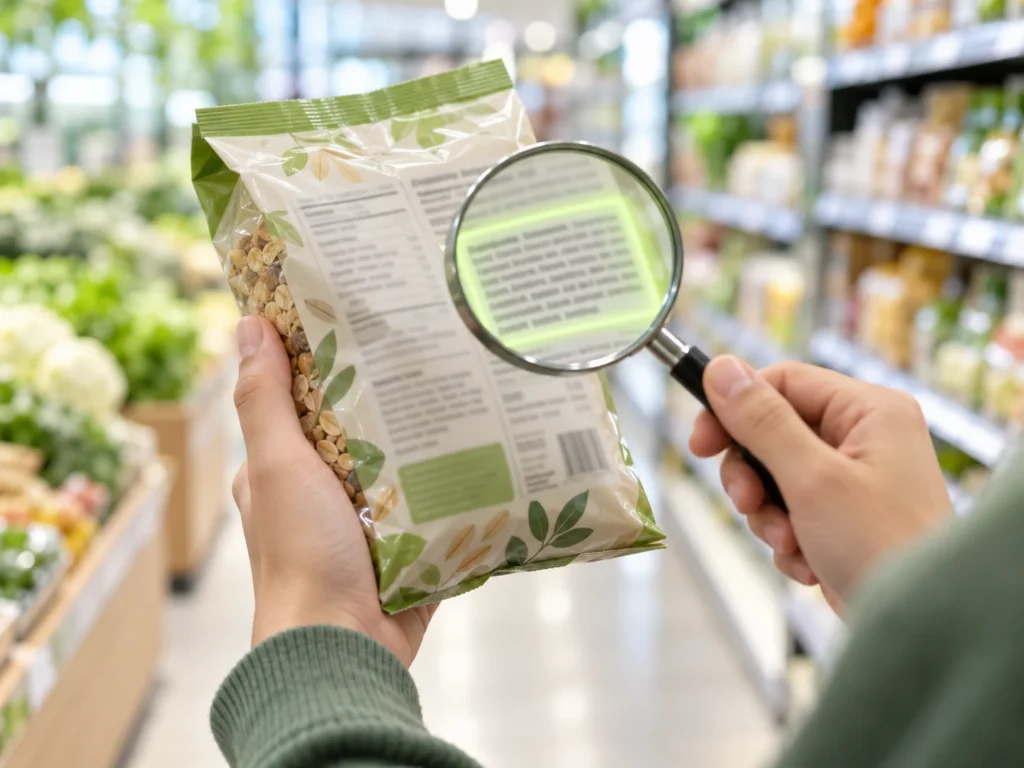
Reading food labels with a vegan eye comes down to five steps. With a little practice, it takes less than a minute.
- Check the front of the pack first. A certified vegan label is the most reliable sign. “Vegetarian” or “lactose-free” aren’t enough.
- Look at the highlighted allergens. In the EU and the UK, Regulation (EU) No 1169/2011 requires allergens to be emphasized in the ingredient list, usually in bold. In the US, they’re often listed in a “Contains” statement. Milk, egg, fish or shellfish flag animal ingredients instantly.
- Scan for animal-derived E numbers. Rule out those that always are (E120, E901, E904, E913, E966, E1105) and note the ambiguous ones (E471, E472, E422, E570, E627, E631, E635, E920).
- Spot the hidden ingredients. Whey, casein, albumin, honey, lard or gelatin can appear anywhere in the list.
- When in doubt, ask or scan. Contact the manufacturer to confirm the origin of an ambiguous additive, or use an ingredient scanner app that checks the label for you.
How AvoidAdditives Works as Your Vegan Ingredient Checker
Remembering all these E numbers in the supermarket aisle isn’t easy. AvoidAdditives checks the label for you and flags additives and ingredients that may not be suitable for a vegan diet.
Turn On the Vegan Profile and Get Automatic Alerts
When you set up your food profile, choose the vegan profile. From then on, every product you check is reviewed against the ingredients and additives that may not suit you. If you’re vegetarian, there’s a dedicated profile for that too.
Scan by Barcode or Snap a Photo of the Ingredients
You have two ways to check a product:
- Barcode scanner: looks up the product’s composition in the food database.
- Photo ingredient scanner: take a picture of the ingredient list and the app automatically detects additives, colorings, emulsifiers and other compounds.
The photo scanner is especially handy for new, imported or recently reformulated products.
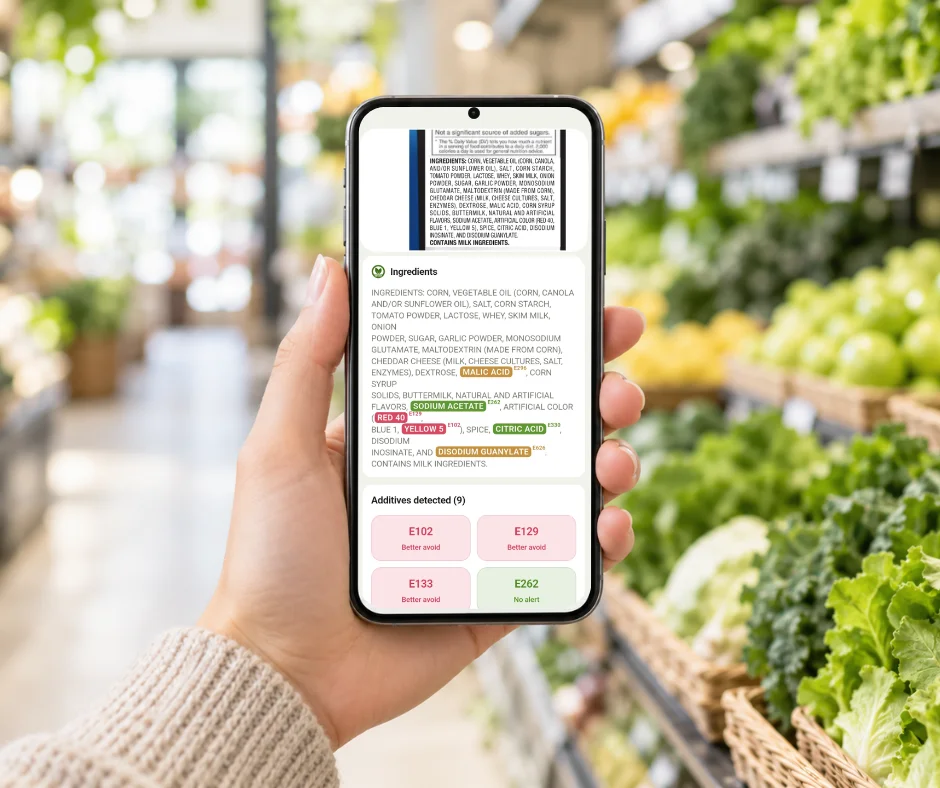

App AvoidAdditives
Set Alerts for Specific Additives (E120, E471…) and Keywords
You can fine-tune your alerts:
- Additive alerts: add the E numbers you want to watch, such as E120 or E471.
- Keyword alerts: create alerts for ingredients such as honey, gelatin, casein or whey.
If a product contains any of them, the app flags it right away.
Look Up Any E Number in the Additive Database
The food additive encyclopedia lets you search by name, E number or category. Learn what each additive is, what it’s used for and its indicative attention level. It’s the quickest way to settle a doubt in front of the shelf.
Understand Every Alert and Keep Your Scan History
After each scan, you’ll see whether the product appears suitable for your profile, which alerts were triggered and the specific reasons behind each one. Your scan history helps you remember which products fit your diet.
An honest note: no app can detect what isn’t on the label, such as sugar refined with bone char or wine fined with gelatin. And for an ambiguous additive like E471, the app flags it so you can check, but only the manufacturer can confirm its exact origin.
Beyond Additives: A Varied, Seasonal Plant-Based Diet
Avoiding animal-derived additives is only part of the picture. A plant-based diet works best when it’s varied, fresh and built on minimally processed whole foods.
Seasonal Fruit and Vegetables for a Plant-Based Diet
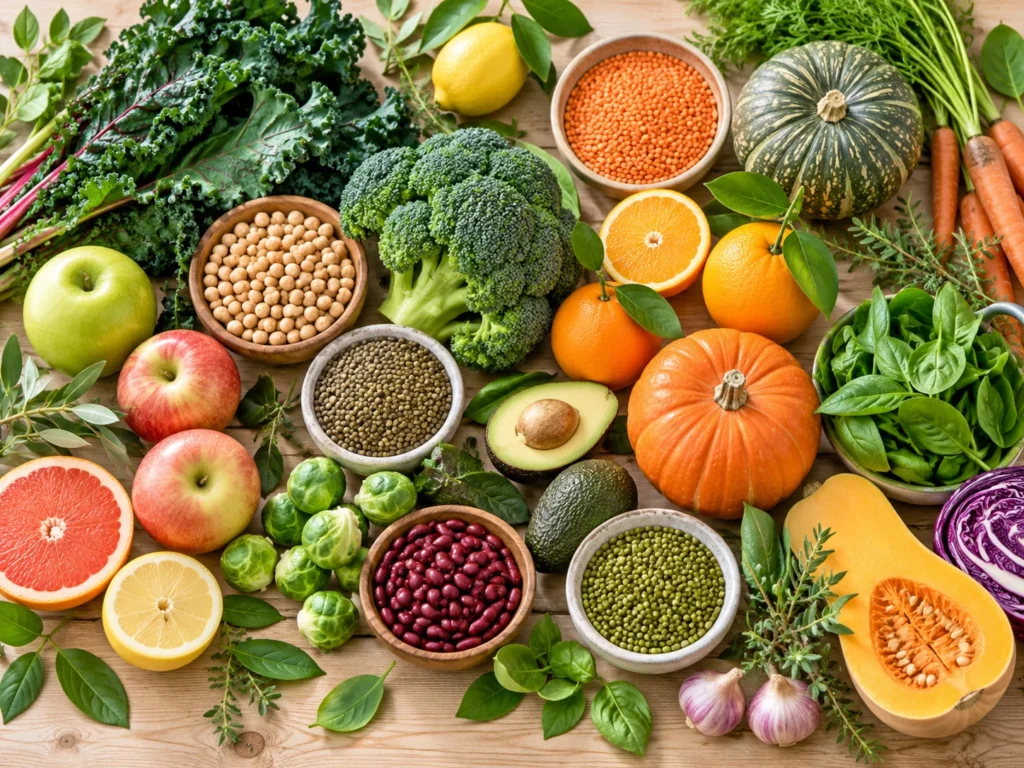
Seasonal produce usually tastes better, costs less and comes with no label to check. In AvoidAdditives you can see which fruits and vegetables are at their best in your climate zone, with information on nutrients, storage and environmental footprint where available.
Beneficial Foods: Protein, Fiber and Vitamins
The app’s beneficial foods guide helps you discover foods linked to energy, digestion and immunity, and nutrients such as protein, fiber, vitamin C and potassium. It’s an easy way to add variety to your vegan meals.
If you follow a vegan diet, talk to a healthcare professional or a registered dietitian about your supplement needs, such as vitamin B12.
FAQ: Vegan Food Additives
Which Food Additives Are Not Vegan?
The most common animal-derived additives are E120 (carmine), E901 (beeswax), E904 (shellac), E913 (lanolin), E966 (lactitol) and E1105 (lysozyme). Others, such as E471, E422 or E631, can be plant-based or animal-based depending on the manufacturer.
Is E471 Vegan?
It depends. E471 can be made from plant or animal fats, and the label doesn’t say which. If the product has a vegan label, it’s suitable; if not, only the manufacturer can confirm.
What Is E120 and Why Isn’t It Vegan?
E120 is a red food coloring made from cochineal, an insect. It’s also listed as carmine or carminic acid. Because it comes from an animal, it isn’t vegan.
Does Vegan Gelatin Exist?
Yes. Traditional gelatin is animal-derived, but plant-based gelling agents do the same job: agar-agar (E406), carrageenan (E407) and pectin (E440).
Is Sugar Always Vegan?
Almost always. In some countries, part of the cane sugar is refined with bone char, which isn’t shown on the label. Beet sugar, the most common type in Europe, doesn’t use this process.
How Can I Tell If a Product Is Vegan?
Look for a certified vegan label, check the highlighted allergens and read the ingredient list for animal-derived E numbers and ingredients. A vegan scanner app like AvoidAdditives, with the vegan profile turned on, does this check for you in seconds.
Conclusion: Read the Label, Choose with Confidence
Spotting animal-derived additives doesn’t mean memorizing an endless list. You only need to know the few that always come from animals, stay calmly curious about the ambiguous ones and recognize the non-vegan ingredients that tend to hide on the label.
Remember that most additives are safe and serve useful purposes. The goal isn’t to fear food labels, but to understand them so that what you buy matches your values.
If you’d like that check to take seconds instead of minutes, turn on the vegan profile in AvoidAdditives and scan your next grocery haul.
Si quieres que esa revisión te lleve segundos en lugar de minutos, activa el perfil vegano en AvoidAdditives y escanea tu próxima compra.