
A bowl of candy by the front door for trick-or-treaters. A bag of gummies for the Halloween party. A handful of colorful sweets for the kids’ table. Nothing looks more harmless, yet a lot of candy contains animal-derived ingredients you can’t see at a glance: pork or beef gelatin in gummies, carmine made from insects in red candy, or shellac giving candy-coated chocolates their shine.
If you follow a vegan diet, finding vegan candy takes more than glancing at the fruit pictured on the bag. Ingredient lists use technical names that rarely explain where each component comes from, and the front of the package almost never tells you.
In this guide you’ll learn which ingredients to check in gummies, hard candy, marshmallows and chewing gum, which vegan gelatin substitutes exist, and how to tell whether a candy is vegan in a few seconds. All with a practical, non-alarmist approach: these ingredients are not a health risk. The question is where they come from and whether they fit the way you eat and your values.
Is candy vegan? The short answer
Not always. A lot of candy isn’t vegan because it contains animal gelatin, colors such as carmine, or glazes such as shellac (sold as confectioner’s glaze) and beeswax. Still, more and more vegan candy is made with pectin, starch or agar. The most reliable way to know is to read the full ingredient list.
To understand why a gummy might not be vegan, think about the four things a manufacturer wants: texture, color, shine and flavor. Each one can be achieved with a plant-based ingredient or an animal-derived one, and the label doesn’t always make it obvious which was chosen.
There’s another catch. Neither the United States nor the United Kingdom has a single legal definition of «vegan» for food labeling. Certification logos help, but not every suitable product carries one. That’s why knowing how to read a label yourself is still your best tool. It also explains why so many people search for «accidentally vegan candy»: products that happen to be vegan without saying so on the front.
What are gummies made of?
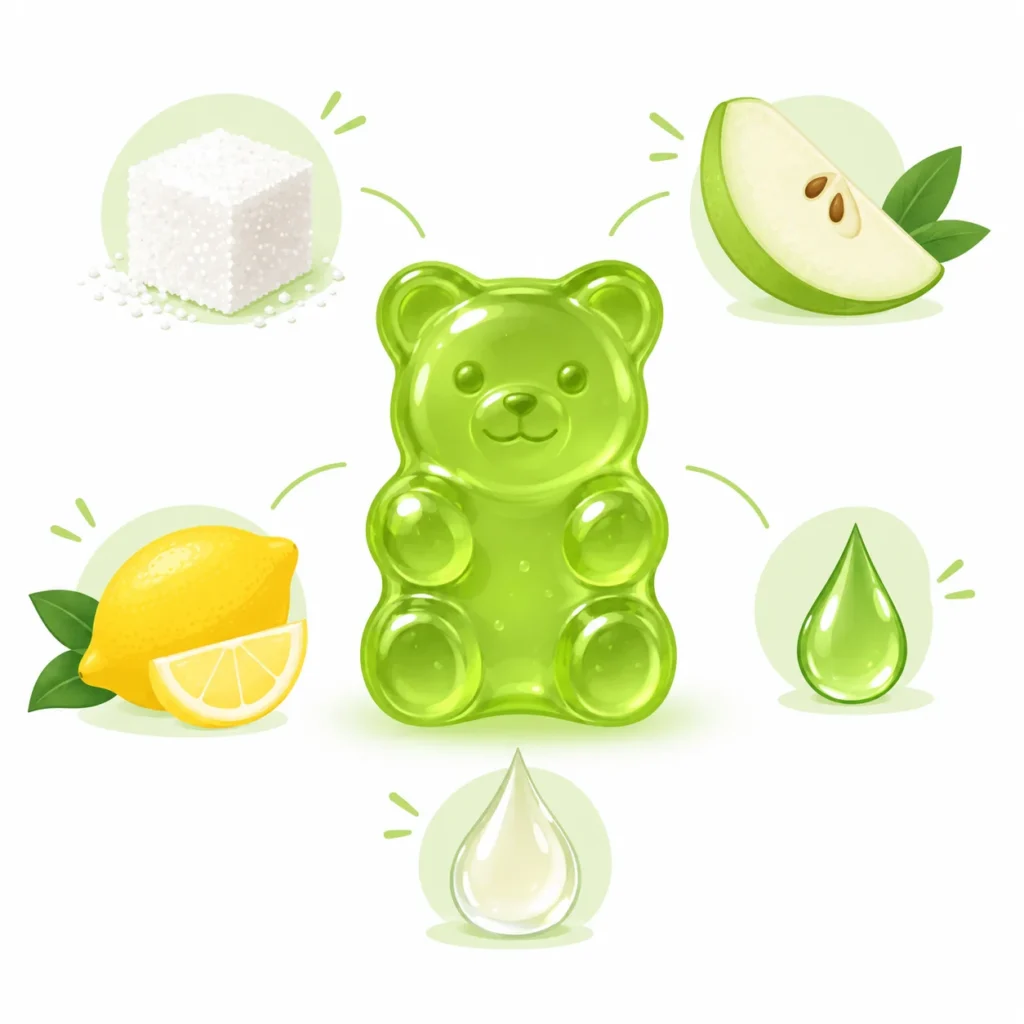
A typical gummy is made mostly of sugar and corn syrup (glucose syrup), plus a gelling agent for texture, acids for tartness, flavors, colors and a coating that keeps the pieces from sticking together. The gelling agent and the coating are the two critical points for a vegan diet.
Here are the usual components and what to check in each:
- Sugars and syrups: sugar, corn syrup, glucose syrup or dextrose. They are plant-based, although in the US some cane sugar is refined with bone char (more on that below).
- Gelling agent: this is the key. It can be animal gelatin or a plant-based alternative such as pectin, starch or agar. Gelatin gives that bouncy, elastic chew; pectin gives a softer, shorter bite.
- Acids: citric acid or malic acid, common in sour candy. They are usually made by fermentation and are rarely a concern.
- Flavors: usually plant-based or synthetic, although labels don’t always say which.
- Colors: they can be plant-based, synthetic or animal-derived, like carmine.
- Glazes and coatings: they add shine and stop pieces from sticking. They can be vegetable oils and carnauba wax, or beeswax and shellac.
In short, two gummies with the same look, flavor and color can be vegan and non-vegan. The difference lies in three or four words on the ingredient list.
The 4 most common animal-derived ingredients in candy
If you only memorize four names before buying candy, make them these: gelatin, carmine, shellac and beeswax. Together they explain most cases where a candy isn’t suitable for vegans.
Gelatin
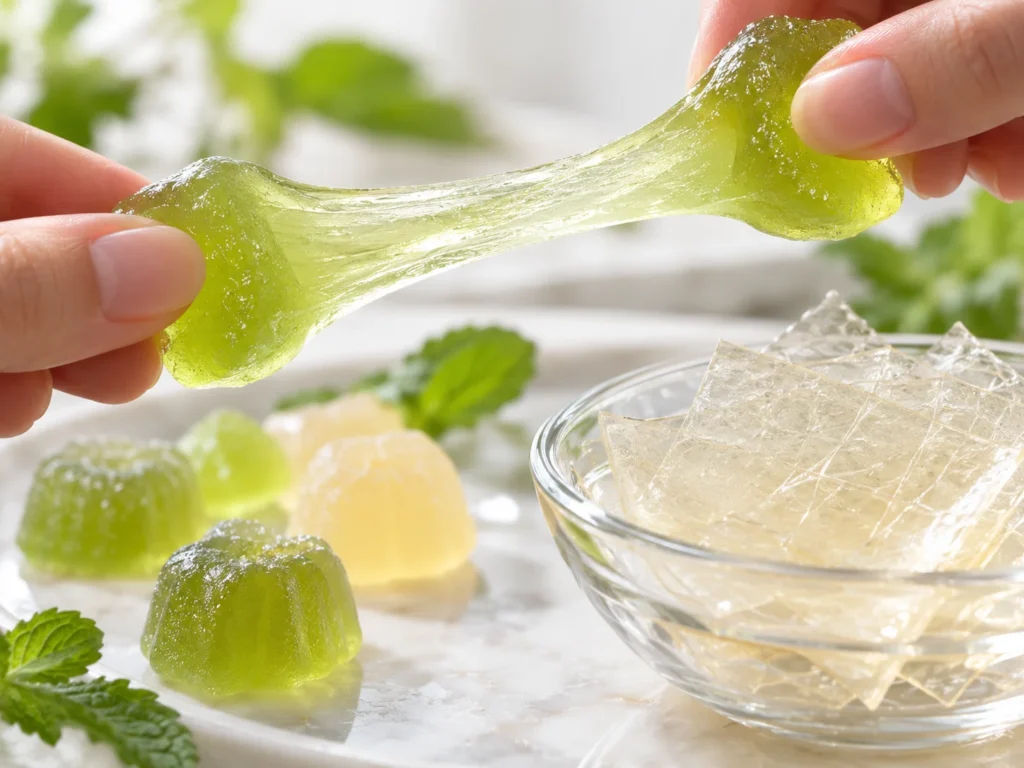
Is gelatin vegan? No. Gelatin is made from collagen found in the skin, bones and connective tissue of animals, mainly pigs and cattle, and less often fish. It’s the ingredient that gives classic gummy bears and gummy worms their elastic, chewy texture.
Gelatin is treated as a food ingredient rather than an additive, so it’s listed simply as «gelatin», «pork gelatin» or «beef gelatin». In the UK it’s spelled «gelatine». You’ll sometimes see the old code E441 online, but it rarely appears on packaging today.
Where you’ll find it: gummies and gummy bears, marshmallows, filled licorice, some chewy candy, chewing gum and candy with creamy fillings. Note that «gelatin» on its own doesn’t say which animal it comes from. For a vegan diet that doesn’t matter: any animal gelatin is ruled out.
Carmine or cochineal (E120)
Carmine is a bright red color extracted from cochineal, a small insect that lives on certain cacti. It produces stable reds, pinks and purples, which is why it’s common in strawberry, cherry and berry-flavored candy.
On the label it can appear as carmine, cochineal, cochineal extract, carminic acid, Natural Red 4 or, in the UK and EU, E120. In the US, food labels must name carmine or cochineal extract specifically instead of hiding it under a generic «color». The word «natural» can be misleading: it is natural, but it’s animal-derived.
Where you’ll find it: red gummies, hard candy, chewing gum, colored coatings and some «fruit» candy.
Shellac or confectioner’s glaze (E904)
Shellac is a resin secreted by the lac insect, which lives on trees in South and Southeast Asia. Once purified, it forms a shiny, moisture-resistant film. In candy it’s used as a glazing agent.
In the US it often appears as confectioner’s glaze, and sometimes as resinous glaze or pharmaceutical glaze. In the UK and EU you’ll see shellac or E904. Is confectioner’s glaze vegan? Usually not, because the name almost always refers to a shellac-based glaze.
Where you’ll find it: candy-coated chocolates, chocolate-covered nuts and raisins, jelly beans, glossy hard candy and candy corn. It’s also used to coat some fresh fruit, which is worth knowing if you’re planning a «healthier» Halloween option.
Beeswax (E901)
Beeswax is made by bees to build their honeycombs. In candy it acts as a glazing and anti-sticking agent: it adds shine and keeps pieces from clumping in the bag.
On the label it appears as beeswax, white beeswax, yellow beeswax or E901. Like honey, it’s an animal product, so most vegans avoid it.
Where you’ll find it: gummies, candy-coated chocolates, licorice, chewing gum and glossy candy. It’s often combined with carnauba wax, which is plant-based, so read the full list.
Quick reference table: how to spot them on the label
| Ingredient | How it appears on the label | Source | Where it’s common | Plant-based alternative |
|---|---|---|---|---|
| Gelatin | gelatin, pork gelatin, beef gelatin, gelatine (UK) | Collagen from pigs, cattle or fish | Gummies, marshmallows, filled licorice, gum | Pectin, agar, starch |
| Carmine | carmine, cochineal extract, carminic acid, Natural Red 4, E120 | Insect (cochineal) | Red gummies, hard candy, gum | Beet red, anthocyanins, paprika extract |
| Shellac | confectioner’s glaze, resinous glaze, shellac, E904 | Resin secreted by an insect | Candy-coated chocolates, jelly beans, candy corn | Carnauba wax, candelilla wax |
| Beeswax | beeswax, white or yellow beeswax, E901 | Bees | Gummies, coated chocolates, licorice, gum | Carnauba wax, vegetable oils |
Other non-vegan ingredients in candy
Beyond the big four, several animal-derived ingredients show up regularly in candy, chocolate bars and sweets. Some are obvious; others hide behind technical names.
- Milk and dairy: milk powder, whey, lactose, casein, caseinate, butter or cream. Common in toffee, caramels, milk chocolate, creamy fillings and fudge.
- Eggs: egg white, albumen or ovalbumin. Found in some marshmallows, meringues, nougat and fluffy candy.
- Honey: in honey candy, nougat and some cough drops.
- Lactitol (E966): a sweetener made from milk lactose, used in some sugar-free candy and gum.
- Bone char sugar: in the US, some cane sugar is filtered through bone char during refining. It doesn’t appear on the label, so stricter vegans look for products made with beet sugar, organic sugar or a vegan certification.
- Ingredients of uncertain origin: mono- and diglycerides (E471) or stearic acid (E570) can be made from plant or animal fats. The label looks the same either way, so only the manufacturer can confirm their source.
For the full list of animal-derived additives, including those that always come from animals and those that depend on the manufacturer, check out our guide to animal-derived additives that aren’t suitable for vegans.
Vegan gelatin substitutes: how gelatin-free candy is made
The good news is that gelatin has effective plant-based substitutes. Gelatin-free candy is made with plant-derived gelling agents that achieve very similar textures, although each one brings a slightly different bite.
These are the most common vegan gelatin substitutes and thickeners in vegan gummies:
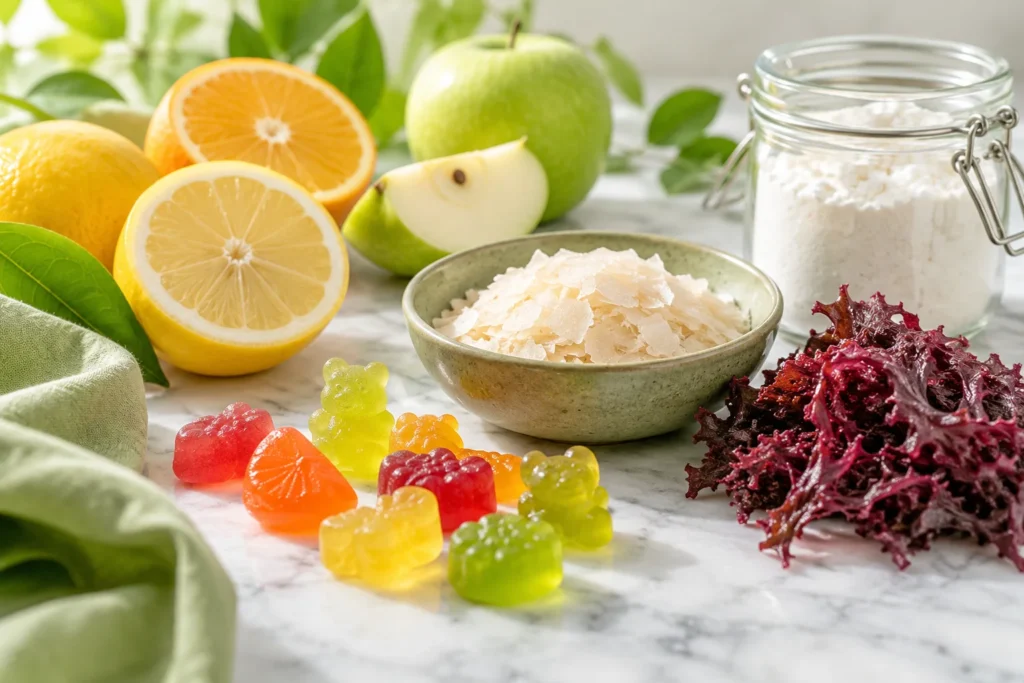
- Pectin (E440): extracted from citrus peel and apples. It’s the most common substitute in fruit gummies and gives a tender texture, less bouncy than gelatin. Pectin gummies are often a good starting point when you’re looking for vegan options.
- Agar (E406): made from red seaweed. It forms firm gels that stay stable at higher temperatures.
- Carrageenan (E407): also derived from seaweed, usually combined with other gelling agents.
- Starches and modified starches: from corn, potato or tapioca. They create a denser, chewier texture typical of licorice and some gummies.
- Gum arabic (E414): a resin from the acacia tree, common in pastilles and gum drops.
- Gellan gum (E418): produced by bacterial fermentation, it adds firmness and clarity.
Shine and color have plant-based versions too. For glazing, manufacturers use carnauba wax (E903), which comes from a Brazilian palm, candelilla wax (E902) or vegetable oils. For color, there’s beet red (E162), anthocyanins from grapes or black carrots (E163), paprika extract (E160c), turmeric (E100) and spirulina extract.
Watch out for a common trap: gelatin-free does not automatically mean vegan. A gummy can use pectin and still contain carmine for color or beeswax for shine. Whether you’re searching for gelatin-free candy or the best vegan gelatin substitute, always check the full list.
Is it vegan? Common questions by type of candy
Every type of candy has its usual suspects. Knowing where to look saves you time in the candy aisle.
Are gummy bears vegan?
Most classic gummy bears aren’t, because their chewy texture comes from gelatin. Vegan gummy bears do exist and are usually made with pectin or starch. Check the color too: red and pink bears may get their shade from carmine.
Is hard candy vegan?
Hard candy is often vegan, since it’s made from sugar, corn syrup, acids, flavors and colors. The points to check are red colors (possible carmine), honey in cough drops, dairy in butterscotch and caramels, and shiny glazes. Chewy candy may also contain gelatin for texture.
Is licorice vegan?
Classic licorice is made from wheat flour, sugar, syrups, licorice extract and starch, so many varieties are vegan. However, some include beeswax or shellac for shine, and filled or soft licorice may contain gelatin. Also check the color in red licorice twists.
Are marshmallows vegan?
Most marshmallows aren’t vegan: their airy texture comes from gelatin and, in some recipes, egg white. Vegan marshmallows made with agar, starch or aquafaba are available, and they usually say so clearly on the package.
Is chewing gum vegan?
It depends on the brand. «Gum base» is a blend whose origin isn’t detailed on the label, and some gums also contain gelatin, carmine, beeswax, shellac or lactitol in sugar-free versions. If the manufacturer doesn’t state that it’s vegan, the label alone can’t always confirm it.
Is dark chocolate vegan?
Dark chocolate can be vegan if it only contains cocoa, cocoa butter, sugar and sometimes plant-based emulsifiers. Milk and white chocolate aren’t. With candy-coated chocolates, also check the glaze (shellac, beeswax) and the colors. A «may contain milk» warning is for people with allergies: it signals a cross-contact risk, not that milk is an ingredient. Each vegan decides how to weigh it.
Are sour gummies vegan?
Sour gummies, sugar-coated sour strips and sour belts work like any other candy. The sour coating (sugar with citric or malic acid) is plant-based, but the base may contain gelatin and bright colors may come from carmine. Flat sour strips are usually made with flour and starch, which makes them more likely to be vegan, although it’s always worth checking.
Is candy corn vegan?
The Halloween classic usually isn’t. Traditional candy corn recipes commonly include gelatin, confectioner’s glaze (shellac) and sometimes honey. Some brands now make vegan candy corn without these ingredients, so if it’s a must for your Halloween bowl, look for a version labeled vegan or check the ingredient list carefully.
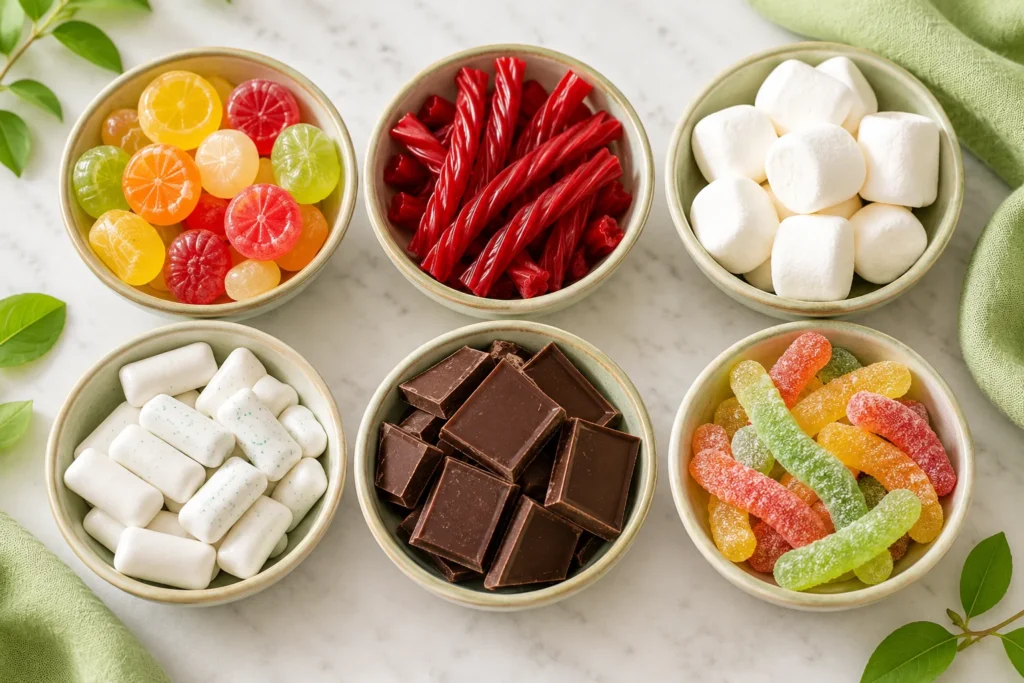
How to tell if candy is vegan in 3 steps
Checking whether a candy is vegan takes less than a minute once you know what to look for. These three steps work for gummies, hard candy, chewing gum and chocolate bars.
Step 1: look for the key names on the ingredient list
Read the full list, not just the front of the package. The words that give away an animal-derived ingredient are: gelatin, carmine, cochineal, shellac, confectioner’s glaze, beeswax, honey, milk, whey, lactose, casein, egg and albumen. If any of them appears, the candy isn’t vegan.
Step 2: check the additive codes and color names
In the US, colors and additives are listed by name, so look for «cochineal extract», «carmine» or «Natural Red 4». In the UK and EU, some of them appear only as E numbers. The ones that come up most often in candy are E120 (carmine), E904 (shellac), E901 (beeswax) and E966 (lactitol). If you see mono- and diglycerides (E471) or stearic acid (E570), remember they can be plant- or animal-based: only the manufacturer can confirm.
Step 3: when in doubt, ask the manufacturer or look for a logo
Recipes change by country, batch and reformulation. A candy that was vegan last year might not be today, and the same product can have different ingredients in the US and the UK. If you’re unsure, check the manufacturer’s website or customer service, or choose products with a certified vegan logo.
Do it in seconds with AvoidAdditives
Reading tiny print in the candy aisle, in a hurry and with kids around, isn’t always easy. That’s what AvoidAdditives is for: an app that can detect gelatin and other animal-derived ingredients on your candy labels . Just scan the barcode or take a photo of the ingredient list.
With the vegan profile turned on, the app works as a vegan ingredient checker: it alerts you when it finds ingredients or additives that may not be suitable for a vegan diet. You can also create alerts for specific additives, such as E120, E904 or E901, and keyword alerts, such as «gelatin», «cochineal» or «beeswax», so you’re notified every time they appear.
The app doesn’t decide for you. It simply shows the information clearly so you can answer «is it vegan?» according to your own values. And if something doesn’t match the package in your hand, you can report it to help improve the database.
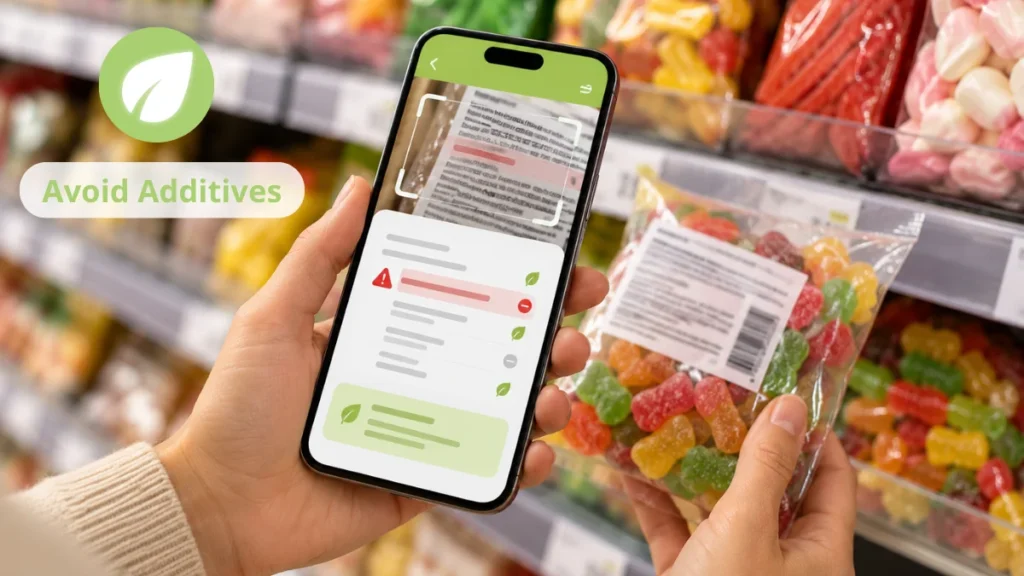

App AvoidAdditives
Vegan candy at the grocery store: what to check before you buy
More and more grocery stores and supermarkets stock vegan candy, from store brands to specialty labels. But availability and recipes change often, so the rule is the same everywhere: trust the label on the package in your hand, not what you remember from your last shopping trip.
A few practical tips for the candy aisle:
- Separate the front of the pack from the ingredient list. «Made with real fruit juice», «natural flavors» or «no artificial colors» say nothing about whether a candy is vegan. A candy can use natural colors like carmine and still not be suitable.
- Look for a vegan claim or logo. If the manufacturer states it, you can skip the detective work. If it doesn’t, that doesn’t necessarily mean it isn’t vegan: it’s time to check.
- Be careful with bulk candy. In bulk bins and pick ‘n’ mix stands, ingredient information is usually on a sign or a product sheet. If you can’t see it, ask the store before filling your bag.
- Compare versions of the same product. Halloween and holiday editions may use different colors and coatings than the regular version.
- Re-check your favorites now and then. Reformulations are common and aren’t always announced on the package.
Tips for an easy vegan Halloween
Halloween is the night with the most candy per square foot. With a bit of planning, you can enjoy it without spending the party reading labels.
- Prepare your trick-or-treat candy in advance. Check your vegan Halloween candy at home, calmly, and make individual treat bags to hand out. That way you avoid grabbing whatever’s left at the last minute.
- Mix vegan candy with other treats. Dried fruit, homemade popcorn, pumpkin- or bat-shaped cookies and vegan dark chocolate all work well on a Halloween treat table.
- Think about other people’s allergies. If you’re handing out treats to kids you don’t know, avoid nuts and common allergens, and keep candy in its original wrappers so families can read the label. Some households also offer non-food treats, such as stickers or glow sticks.
- Label your treat table. A small sign saying «vegan» or «gelatin-free» helps guests choose without having to ask.
- Sort the haul together. When your kids come home with a full bag after trick-or-treating, sort the vegan candy from the rest with them. It’s a great way to teach them how to read labels.

Frequently asked questions about vegan candy
What candy is vegan?
Candy is usually vegan when it uses plant-based gelling agents (pectin, starch or agar), plant-based or synthetic colors and plant-based glazes such as carnauba wax. Many hard candies, classic licorice, flat sour strips and gummies made with pectin fall into this group. Always confirm on the ingredient list, because recipes vary by brand and country.
Is gelatin-free candy vegan?
Not always. Gelatin-free candy can still contain carmine for red colors, shellac or beeswax for shine, or dairy ingredients. To be vegan, every ingredient on the list must be plant-based or synthetic.
Is the gelatin in candy made from pork?
Often, yes, although beef gelatin is also used and, less frequently, fish gelatin. Labels don’t always specify the animal. For a vegan diet the exact source doesn’t change anything: any animal gelatin is ruled out.
Is carmine vegan?
No. Carmine, also listed as cochineal extract, Natural Red 4 or E120, is a red color obtained from an insect. Even though it’s marketed as a natural color, it’s animal-derived and not suitable for vegans.
Is shellac (confectioner’s glaze) vegan?
No. Shellac is a resin secreted by an insect and is used to give candy-coated chocolates, jelly beans and some fruit their shine. The most common plant-based alternative is carnauba wax.
Is beeswax vegan?
No. Beeswax is produced by bees, so, like honey, most vegans avoid it. In candy it’s often used alongside carnauba wax, so check whether both appear on the list.
Are Skittles or Starburst vegan?
It depends on the product and the country. Recipes for well-known brands differ between the US and the UK and change over time, and some varieties contain gelatin or other animal-derived ingredients while others don’t. Check the label of each package or scan it before buying.
Is halal candy vegan?
Not necessarily. Halal candy may use beef or fish gelatin instead of pork, and it can also contain carmine, beeswax or dairy. Halal doesn’t mean vegan.
What does «may contain milk» mean on candy?
It’s a warning for people with allergies. It means the product is made in a facility that also handles milk and there’s a risk of cross-contact. It doesn’t mean milk is an ingredient. Each vegan decides how to weigh this warning.
Choose your vegan candy with confidence
Finding vegan candy is much easier when you know what to look for. Gelatin, carmine, shellac (confectioner’s glaze) and beeswax are the four names that show up most often in non-vegan candy, while milk, eggs and honey complete the list of usual suspects. On the other side, pectin, agar, starch and carnauba wax prove that a gummy can be just as delicious without animal-derived ingredients.
This Halloween, and all year round, take a few seconds to read the label before filling your bag. And if you’d like to do it even faster, download AvoidAdditives, turn on your vegan profile and scan your candy to see right away whether it fits the way you eat.