
Breathing Techniques to Reduce Stress: The Ultimate Guide to Finding Calm in Minutes
In our fast-paced world, finding effective methods to reduce stress has become a fundamental necessity to maintain our physical and mental balance. Among the various strategies available, breathing techniques to reduce stress stand out for their immediate effectiveness and for not requiring special tools. Deep breathing is one of the best ways to reduce stress in the body naturally and is accessible to everyone.
When we experience stress, our body activates the sympathetic nervous system, known as the “fight or flight” response, which increases heart rate, accelerates breathing, and raises blood pressure. However, by practicing breathing exercises for anxiety, we send a powerful message to the brain to activate the parasympathetic nervous system, responsible for relaxation and recovery of the organism.
In this extensive article, we will thoroughly explore various breathing techniques, with special emphasis on box breathing (or square breathing), an extraordinarily effective method for how to reduce stress quickly in challenging situations. You’ll discover how to incorporate these exercises to calm nerves into your daily routine and transform your response to stressful situations.
Why is Breathing Key to Combating Stress?
The Scientific Connection Between Breathing and Stress
The way we breathe directly affects our entire body. When we practice deep breathing benefits, multiple positive effects are activated in our body. Oxygen exchange improves, the production of stress hormones like cortisol is reduced, and the release of endorphins, the neurotransmitters responsible for the feeling of well-being, is stimulated.
Scientific studies have shown that breathing exercises for anxiety can significantly reduce stress levels in just 5 minutes of consistent practice. This happens because conscious breathing activates the vagus nerve, the main component of the parasympathetic system, which counteracts the effects of the stress response.
Immediate and Long-term Benefits of Breathing Techniques
When you learn how to control anxiety with breathing, you gain both immediate and prolonged benefits:
Immediate benefits:
- Reduced heart rate
- Decreased blood pressure
- Muscle relaxation
- Greater mental clarity
- Almost instant feeling of calm
Long-term benefits:
- Greater resistance to stress
- Better sleep quality
- Strengthened immune system
- Improved concentration and memory
- More effective emotional regulation
Box Breathing: The Ultimate Technique to Calm the Mind
What Exactly is Box Breathing?
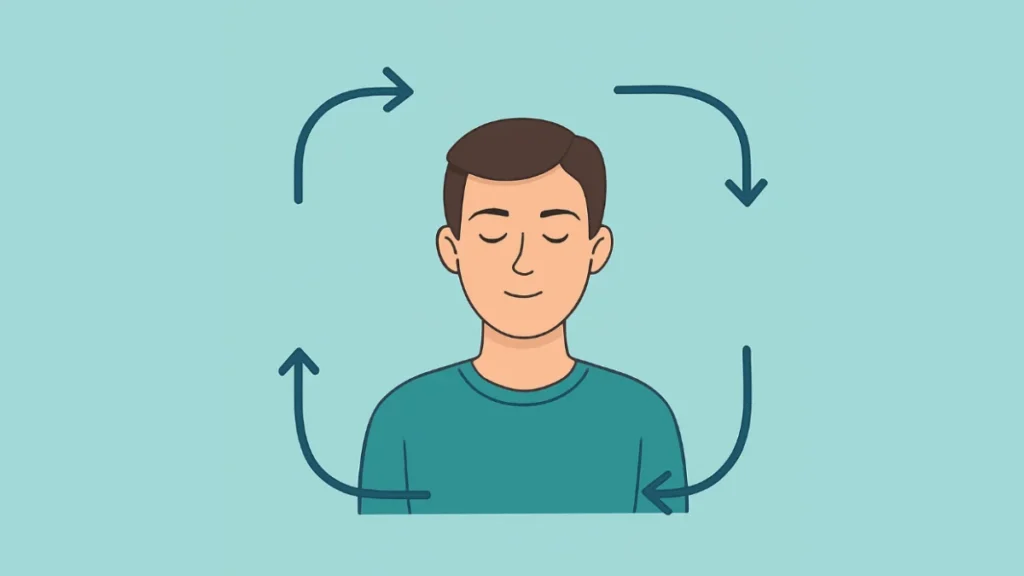
Box breathing, also known as square breathing technique, is a powerful and structured method to regulate the nervous system. Its name derives precisely from its structure, which resembles a square with four equal sides, representing the four phases of breathing, each with the same duration.
This breathing technique to reduce stress stands out for its simplicity and effectiveness. Unlike other more complex methods, box breathing can be learned in minutes and applied immediately in tense situations. Navy SEALs, known for their extraordinary ability to stay calm under extreme pressure, use this technique as part of their training, confirming its effectiveness for how to reduce stress quickly.
Specific Benefits of Square Breathing
Box breathing offers particular advantages that make it one of the most effective relaxation techniques in 5 minutes:
- Nervous system balance: Perfectly regulates the balance between the sympathetic and parasympathetic systems.
- Optimal oxygenation: By including controlled retention, it improves gas exchange in the lungs.
- Easy to memorize: Its structure in four equal steps makes it easy to remember even in tense moments.
- Versatility: Can be practiced anywhere and anytime without drawing attention.
- Measurable effect: Many users report a decrease in anxiety after just 2-3 complete cycles.
Step-by-Step Guide: How to Practice Diaphragmatic Breathing Tutorial
Diaphragmatic breathing is the foundation of all effective breathing techniques, including box breathing. Before mastering any advanced method, it’s essential to understand how to correctly activate the diaphragm:
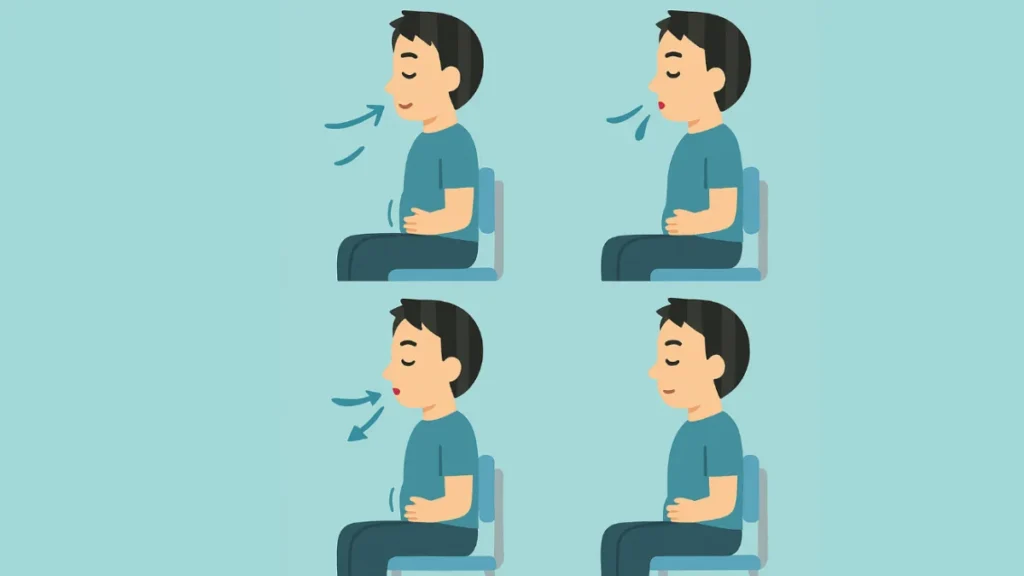
- Find a comfortable position: Sit with your back straight or lie down, placing one hand on your chest and the other on your abdomen.
- Inhale slowly through your nose: Feel how your abdomen expands like a balloon, while your chest remains relatively still. The hand on your belly should rise more than the hand on your chest.
- Exhale completely: Let all the air out through your mouth gently, as if you were blowing on a candle without extinguishing it. Feel how your abdomen contracts.
- Repeat the process: Continue breathing this way for 3-5 minutes, focusing on the movement of the diaphragm.
This diaphragmatic breathing tutorial is fundamental because it activates the lower part of the lungs, where the most efficient oxygen exchange occurs, thus maximizing the benefits of deep breathing.
The Step-by-Step Technique: Mastering Box Breathing
Detailed Instructions for Beginners
Now that you understand the importance of diaphragmatic breathing, we can delve into the complete square breathing technique:
- Preparation: Find a quiet place for your first practice sessions. Sit in a comfortable position with your shoulders relaxed to facilitate diaphragmatic breathing.
- Phase 1 – Inhalation: Inhale slowly through your nose for exactly 4 seconds. Visualize how the air fills your lungs from bottom to top, expanding your abdomen. This is the first side of your imaginary “box.”
- Phase 2 – Retention with full lungs: Hold the air in your lungs for 4 seconds, without tension. Simply hold your breath comfortably. This is the second side of your box.
- Phase 3 – Exhalation: Exhale slowly through your nose for 4 seconds, completely emptying your lungs. Feel how your abdomen gently contracts. This is the third side of the box.
- Phase 4 – Retention with empty lungs: Keep your lungs empty for 4 seconds without forcing. This is the fourth and final side that completes the box.
- Repetition: Start the cycle again with another 4-second inhalation. Repeat the complete process for at least 5-10 cycles.
Variations for Intermediate and Advanced Practitioners
As you become familiar with basic box breathing, you can explore these variations to deepen the benefits:
5-5-5-5 Breathing: Increase the duration of each phase to 5 seconds when you feel comfortable with the 4-second rhythm. This increment enhances the relaxing effects of the technique.
4-7-8 Breathing: A variation that modifies the square format, where you inhale for 4 seconds, hold for 7, and exhale for 8. This version emphasizes prolonged exhalation, especially useful for inducing sleep.
Triangular Breathing: Similar to box breathing, but eliminates one of the retentions, creating an inhalation-retention-exhalation pattern, useful for those who find double retentions uncomfortable.
Ideal Moments to Apply Exercises to Calm Nerves
Everyday Situations Where to Apply Box Breathing
This breathing technique to reduce stress can be strategically incorporated into different moments of your day:
- Before important meetings: Dedicate 2 minutes to box breathing before entering a presentation or interview to regulate your nervous system.
- During traffic jams: Take advantage of red lights to complete a full cycle, transforming a moment of potential frustration into an opportunity for calm.
- In moments of family tension: When you feel a discussion intensifying, take a brief break to practice your breathing.
- Before sleeping: Use this technique as a nightly ritual to prepare your body and mind for restorative sleep.
- Upon waking: Start your day with 3-5 minutes of box breathing to establish a tone of calm and mental clarity.
How to Integrate Breathing into Your Daily Routine
To turn breathing exercises for anxiety into a consolidated habit:
- Anchor the practice: Associate box breathing with activities you already do daily, such as brushing your teeth or waiting for water to boil for coffee.
- Set reminders: Configure subtle alarms on your phone for conscious breathing breaks throughout the day.
- Practice micro-sessions: Even 30 seconds (2 complete cycles) can make a difference when performed consistently several times a day.
- Keep a record: Briefly note how you feel before and after each session to evidence the benefits.
Complementary Techniques to Maximize Benefits
Combining Breathing with Visualization
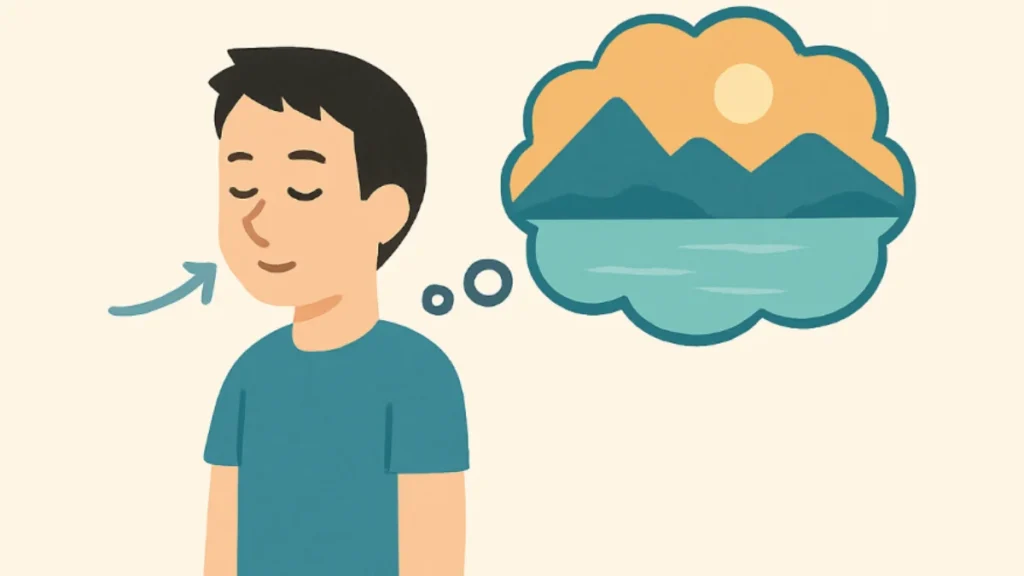
To enhance the effects of box breathing, you can incorporate visual elements that enrich the experience:
- Square visualization: Literally imagine a square and visually trace each side while completing the different phases of breathing.
- Chromatic visualization: Associate specific colors with each phase. For example, blue for inhalation, green for the first retention, gold for exhalation, and violet for the second retention.
- Number visualization: Some practitioners find it helpful to mentally visualize numbers 1 through 4 in each phase, as if internally marking time.
Technological Support: Apps and Digital Resources
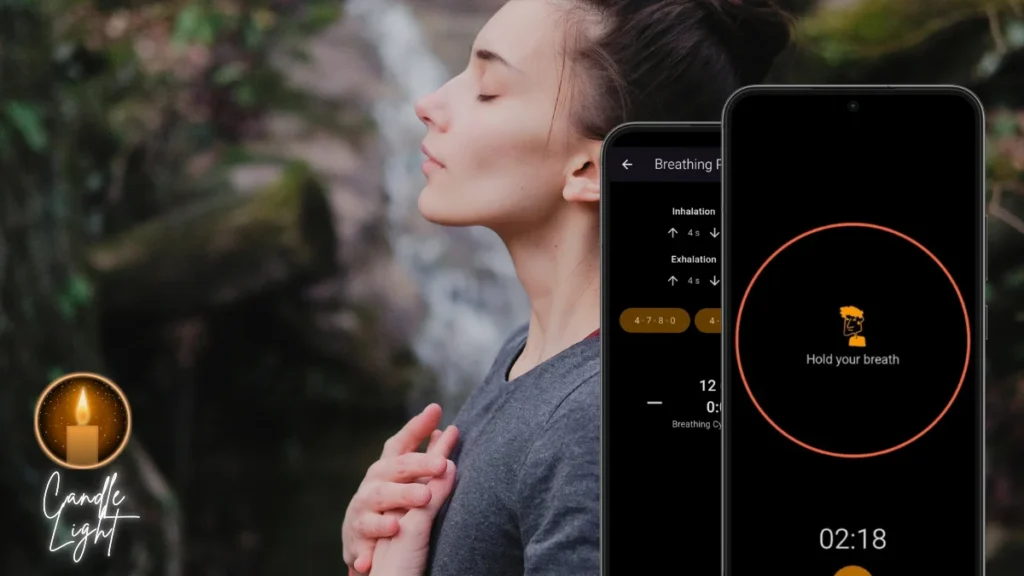
The digital world offers valuable tools to facilitate your practice of breathing techniques to reduce stress:
- Specialized applications: There are several applications dedicated to guiding breathing exercises. For example, the Candle Light app offers a specific function to perform box breathing and reduce stress with precise visual cues and timing.
- Guided videos: Platforms like YouTube contain numerous videos that guide breathing with synchronized visual stimuli.
- Customizable timers: Simple timing applications that you can configure to mark the 4-4-4-4 second intervals.
Adapting Techniques to Different Stress Situations
Breathing for Acute Anxiety Crises
During intense episodes of anxiety, you can adapt box breathing for a more immediate intervention:
- Start with exhalations: If you’re hyperventilating, focus first on completely exhaling to reestablish CO2 balance.
- Temporarily simplify: In moments of crisis, you can reduce to a 3-3-3-3 pattern to facilitate tracking.
- Add physical contact: Place one hand on your abdomen and another on your heart to add a tangible element that anchors you to the present.
Breathing for Chronic Stress
For those facing prolonged stress, these modifications can be beneficial:
- Longer sessions: Extend the practice to 10-15 minutes daily, preferably divided into two sessions (morning and night).
- Gradual increase: Start with 4-4-4-4 cycles and slowly progress to 6-6-6-6 to deepen the relaxing effects.
- Combination with gentle stretching: Incorporate slow stretching movements between series of breathing to release accumulated physical tension.
The Science Behind How to Reduce Stress Quickly Through Breathing
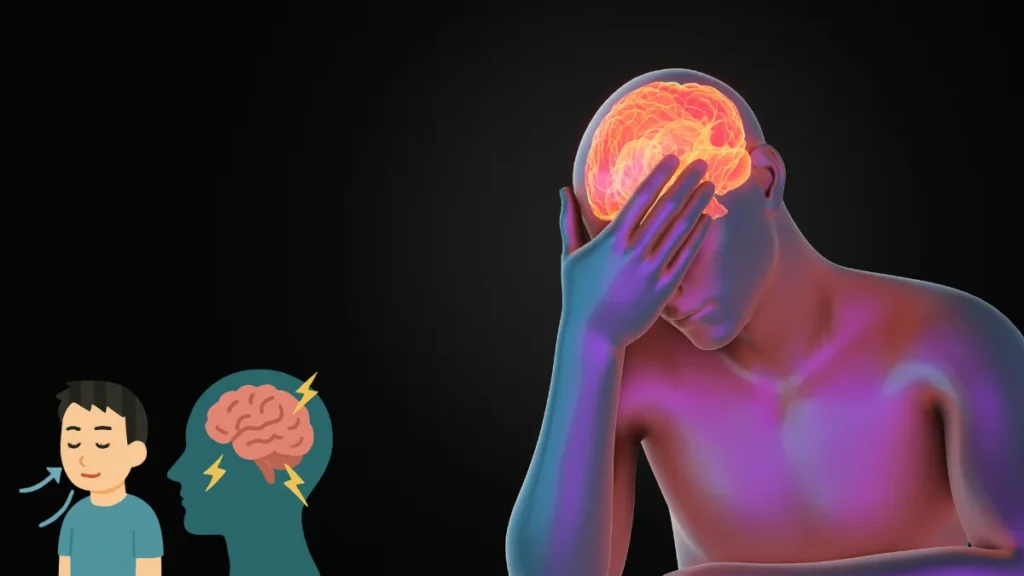
The Nervous System and Its Response to Breathing Pattern
Scientists have extensively studied the impact of different breathing patterns on our nervous system. Box breathing is so effective because:
- It activates the vagus nerve: This cranial nerve is the main component of the parasympathetic system, responsible for “braking” the stress response.
- It balances CO2 levels: Paused breathing with controlled retentions optimizes the balance between oxygen and carbon dioxide in the blood.
- It reduces amygdala activity: This brain structure linked to fear processing decreases its activation during controlled breathing.
- It synchronizes brain waves: Regular breathing patterns promote brain wave states associated with calm and mental clarity.
Recent Scientific Findings on Breathing and Stress
The most current research on breathing techniques to reduce stress confirms:
- A Stanford University study showed that just 5 minutes of controlled breathing can significantly reduce blood cortisol levels.
- Researchers at the Max Planck Institute discovered that rhythmic breathing like the box technique increases heart coherence, an indicator of autonomic nervous system balance.
- A meta-analysis published in the Journal of Psychiatric Research confirmed that breathing-based interventions can be as effective as certain medications for mild to moderate anxiety disorders.
Overcoming Common Obstacles in Practice
Frequent Difficulties and How to Solve Them
Even the simplest techniques like box breathing can present initial challenges:
Problem: Difficulty maintaining a constant rhythm Solution: Use a metronome or application that visually marks the seconds. With practice, your body will internalize the rhythm.
Problem: Feeling dizzy Solution: This may indicate that you’re breathing too deeply. Slightly reduce the depth of your inhalations while maintaining the same rhythm.
Problem: Constant mental distraction Solution: Incorporate deliberate mental counting (1-2-3-4) in each phase. This additional focus helps anchor the mind.
Problem: Discomfort during retentions Solution: Start with shorter retentions (2 seconds) and gradually increase until reaching the full 4 seconds.
Building Consistency in Practice
The true power of breathing exercises for anxiety lies in consistency:
- Start small: 3 minutes are enough to begin. What’s important is regularity, not duration.
- Establish a “non-negotiable minimum”: Determine a minimum amount that you will perform without exception, even on your busiest days. It could be as brief as a complete cycle.
- Keep a visible record: A simple calendar where you mark your practice days can significantly increase your adherence.
- Find a practice partner: Sharing the commitment with someone close multiplies the likelihood of maintaining the habit.
Frequently Asked Questions About Breathing Techniques to Reduce Stress
When should I start noticing benefits?
Most people experience an immediate feeling of calm after completing 3-4 cycles of box breathing (approximately one minute). Cumulative benefits, such as greater resistance to stress, are usually noticed after 2-3 weeks of regular practice.
Can I practice box breathing lying down?
Yes, although the sitting position is initially recommended to maintain attention. If you practice lying down, make sure to keep your spine straight and avoid falling asleep during practice (unless that’s your goal).
Is it normal to feel anxiety at the beginning?
Some people may experience a slight increase in anxiety when paying attention to their breathing. This is temporary and decreases with practice. If it occurs, start with shorter sessions and gradually increase.
How do I know if I’m doing diaphragmatic breathing correctly?
A clear indicator is that your abdomen expands during inhalation and contracts during exhalation, while your chest remains relatively still. You can verify this by placing a light book on your abdomen and observing how it rises and falls.
Integrating Box Breathing into Your Daily Life
Box breathing represents an extraordinarily accessible and effective tool for how to reduce stress quickly in our fast-paced lives. Unlike many other wellness interventions, it requires no special equipment, can be practiced anywhere, and begins to offer benefits from the first session.
The true power of this breathing technique to reduce stress lies in its simplicity and adaptability. Whether you’re facing a specific moment of tension or looking for a tool to manage chronic stress, the square breathing technique offers a structured and scientifically supported method to reconnect with your inner calm.
We invite you to incorporate breathing exercises for anxiety as a daily ritual, as natural as brushing your teeth or hydrating. With each cycle of conscious breathing, you strengthen your innate ability to emotionally self-regulate and cultivate resilience in the face of life’s inevitable challenges.
Remember: your breath is an always-available anchor to return to the present moment and regain your balance. In a world that constantly pushes us toward the future or drags us to the past, breathing techniques offer us the gift of fully inhabiting the now, where our true capacity for well-being resides.
Are you ready to transform your relationship with stress, one conscious breath at a time?